The Unkillable Demon King
Lee "Faker" Sang-hyeok isn't just the greatest League of Legends player of all time. He's the most financially successful esports competitor the world has ever seen. While most pro gamers peak in their early twenties and fade into streaming or coaching, Faker has spent over a decade at the absolute top of competitive League — and built a fortune that would make traditional athletes take notice.
But how did a kid from Gangseo-gu, Seoul, who started playing League in internet cafés, turn mechanical skill into a multi-million dollar empire? Here's the full breakdown.
Who Is Faker? The Origin Story
Born on May 7, 1996, in Seoul, South Korea, Lee Sang-hyeok grew up in a modest household raised primarily by his father and grandparents. He discovered League of Legends as a teenager and quickly climbed the Korean solo queue ladder, reaching the top of the rankings under the summoner name "GoJeonPa" before being scouted by SK Telecom T1 (now T1) in 2013.
He was 17 years old when he made his professional debut. Within months, he had won his first World Championship.
Fun fact: Faker reportedly turned down a blank-check offer from a North American franchise and a rumored $10 million salary from a Chinese team — choosing instead to stay with T1 and take an equity stake in the organization. That decision alone may have been worth tens of millions.
What makes Faker's story remarkable isn't just the trophies. It's the loyalty. In an era where players chase the biggest paycheck across regions, Faker has played for one organization his entire career. That loyalty, combined with shrewd business decisions, is the foundation of his wealth.
Faker's Career Timeline: From Rookie to Legend
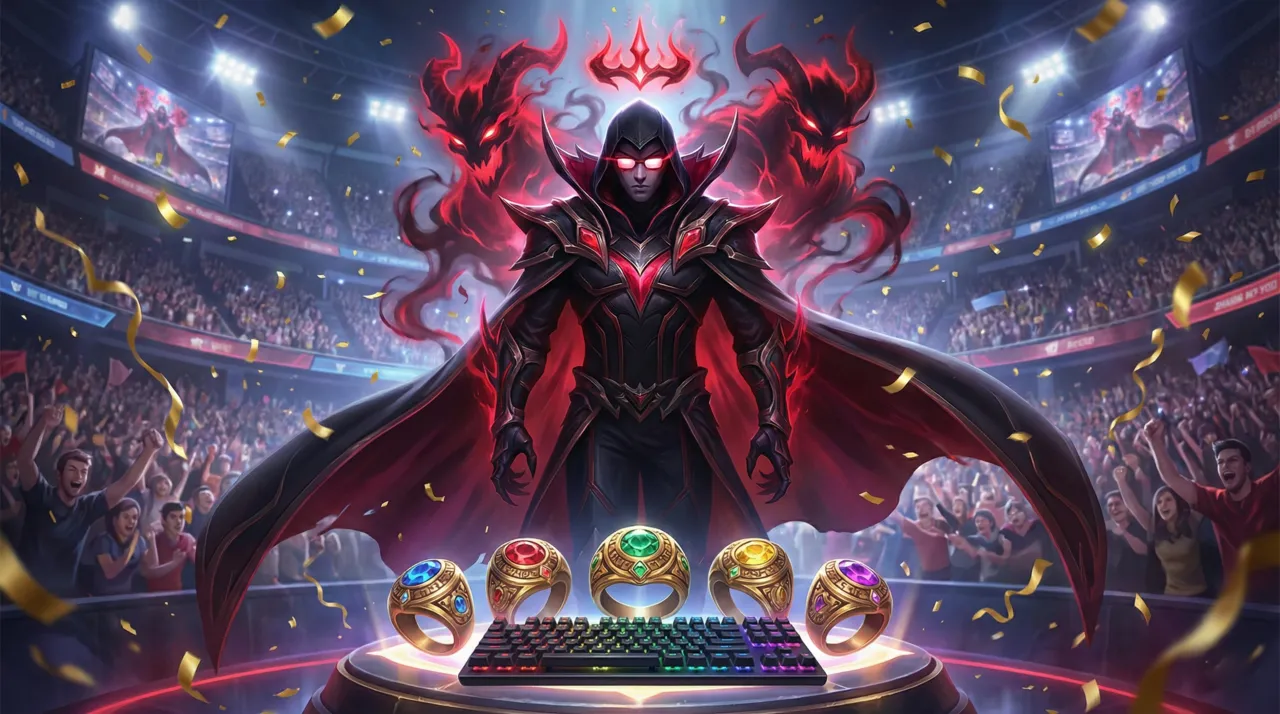
Faker's World Championship Trophies
Beyond Worlds, Faker holds 10 LCK (domestic league) titles and 2 MSI championships. No other player in League of Legends history comes close to this trophy cabinet.
How Faker Makes His Money: Full Breakdown
Faker's wealth doesn't come from one source. It's a diversified portfolio that would impress any financial advisor. Here's where the money comes from:
| Income Source | Estimated Annual / Total | Notes |
|---|---|---|
| T1 Salary | $7–8M / year | One of the highest salaries in all of esports |
| T1 Equity Stake (~6%) | $13M+ (and growing) | Valued at $13.2M in 2020; T1's valuation has grown a lot since |
| Tournament Prize Money | ~$2.1M (career total) | From Worlds, LCK, MSI — tracked competitive winnings |
| Streaming (SOOP) | $1.2–1.8M / year | Exclusive streaming deal on the SOOP platform |
| Brand Sponsorships | $2–4M / year (est.) | Nike, Red Bull, BMW, Mercedes-Benz, Samsung, Razer |
| Riot Games Revenue Share | Undisclosed | Hall of Legends skins, Worlds skins (9 total skins in-game) |
| Real Estate | Rental income | "Faker Tower" — 9-story building in downtown Seoul |
Faker's T1 Salary: The Biggest Contract in LoL History
In 2024, Faker signed a contract extension with T1 reportedly worth around $7 to $8 million per year, keeping him with the organization through 2029. This makes him comfortably the highest-paid League of Legends player in the world.
To put that in perspective: the average LCK player salary is estimated at around $200,000–$400,000 per year. Faker earns roughly 20 times that.
The contract also includes performance bonuses tied to tournament results. Given that T1 has won three consecutive World Championships, those bonuses have been paying out consistently.
Why didn't Faker leave for China? In 2020, Faker reportedly turned down offers exceeding $10 million per year from Chinese and North American teams. Instead, he took a lower base salary with T1 — but negotiated an equity stake in the organization. That ownership position may end up being worth far more than any salary could have been.
The T1 Equity Stake: Faker's Smartest Move
In February 2020, Faker signed a three-year deal that included partial ownership of T1 Entertainment & Sports. He received approximately 6% equity in the organization.
At the time, T1 was valued at roughly $220 million, making Faker's stake worth approximately $13.2 million on paper. But T1's valuation has grown substantially since then, driven by consecutive World Championship wins, expanded sponsorship deals, and the overall growth of the esports industry.
If T1's valuation has grown to $300–400 million (which is plausible given their recent dominance), Faker's 6% stake could be worth $18–24 million alone. Some analysts speculate it could be worth even more if T1 ever goes public or gets acquired.
This is the move that separates Faker from every other esports player. While others chased short-term salary bumps, Faker bet on long-term equity — and it's paying off massively.
Faker Tower: Yes, He Owns a Building
One of the more fascinating aspects of Faker's financial portfolio is his real estate investment. Faker owns a 9-story commercial building in downtown Seoul, affectionately dubbed "Faker Tower" by fans.
The building generates passive rental income from commercial tenants. In Seoul's competitive real estate market, a multi-story commercial building in a prime location represents a significant asset — likely worth several million dollars on its own.
This investment fits Faker's overall approach to money: conservative, long-term, and focused on assets that grow over time.
Faker reportedly spends less than $200 per month on personal expenses. He lives in the T1 team house, eats team-provided meals, and has described his lifestyle as extremely simple. Almost all of his earnings go into savings and investments.
Brand Deals and Sponsorships
Faker's marketability goes way beyond the League community. He has active sponsorship deals with some of the biggest brands in the world:
- Nike — Faker has appeared in Nike campaigns and wears Nike-branded gear during competitions
- Red Bull — Long-standing energy drink partnership
- BMW / Mercedes-Benz — Automotive sponsorships through T1
- Samsung — Electronics partnership (fitting for a Korean superstar)
- Razer — Gaming peripherals sponsorship
The exact values of these deals are not publicly disclosed, but industry estimates suggest top-tier esports sponsorships can range from $500,000 to $2 million per deal annually. With multiple active partnerships, Faker's sponsorship income likely falls in the $2–4 million per year range.
Streaming Income
Faker streams on the SOOP platform (formerly AfreecaTV) under an exclusive deal. While he doesn't stream as frequently as full-time content creators, his streams consistently draw massive viewership numbers due to his celebrity status.
Industry estimates place his streaming income at approximately $1.2 to $1.8 million per year, factoring in the platform deal, donations, and subscriber revenue.
His Twitch channel (used primarily for international audiences) has also generated significant revenue historically, though his primary streaming home is now SOOP.
Hall of Legends: Faker's In-Game Legacy
In 2024, Riot Games launched the Hall of Legends program — and Faker was the first inductee. The event included exclusive Faker-themed Ahri and LeBlanc skins, a career-spanning event pass, and premium skin collections that ranged up to $400+ for the full bundle.
Faker now has 9 in-game skins across his career (from various Worlds wins and the Hall of Legends event). While Riot hasn't disclosed the revenue split, it's standard practice for players to receive a percentage of sales from their championship skins. Given the massive popularity of Faker-branded content, this represents a meaningful additional income stream.
How Does Faker Compare to Other Esports Players?
Faker's net worth dwarfs virtually every other esports professional. The key difference is his diversified income: while players like N0tail earned primarily through prize pools, Faker's wealth comes from salary, equity, real estate, and brand deals. His tournament winnings (~$2.1M) are actually a relatively small portion of his total fortune.
Faker's Signature Champions
Part of what makes Faker so marketable is his iconic champion pool. Over his career, certain picks have become synonymous with his name:
- LeBlanc — His most iconic pick. The champion he's most associated with, known for highlight-reel outplays
- Ryze — A staple throughout his career, picked in multiple Worlds finals
- Azir — The emperor pick that defined his mid-career dominance
- Zed — The champion that made him famous, particularly the legendary 1v1 outplay against Ryu in 2013
- Orianna — His reliable teamfight pick for high-stakes games
- Ahri — Featured in his Hall of Legends skin, representing his versatility
Faker has played over 70 unique champions in professional matches — one of the widest champion pools in competitive history.
What Makes Faker the GOAT?
The "greatest of all time" debate in League isn't really a debate. Here's why:
Longevity: Faker has been competing at the highest level since 2013. Most pro players retire within 3–5 years. He's been dominant for over a decade.
Consistency: He hasn't just won — he's won across multiple eras of the game, with different teammates, different metas, and different playstyles. He adapted every single time.
Clutch factor: From the Zed outplay against Ryu to the Worlds 2023 comeback, Faker consistently performs his best when the stakes are highest.
Legacy impact: Faker didn't just play League. He elevated the entire esports industry. His presence at tournaments drives viewership. His skins drive revenue. His story drives narratives.
The numbers: 6 World Championships. 10 LCK titles. 2 MSI titles. First Hall of Legends inductee. No other player is even close.
Faker's Net Worth: The Bottom Line
Total Estimated Net Worth (2026)
The most impressive part of Faker's wealth isn't the number itself — it's the strategy behind it. He didn't chase the biggest paycheck. He didn't jump to China or North America for a quick payday. He stayed loyal to one organization, negotiated ownership equity, invested in real estate, and let compound growth do its work.
At 29 years old with a contract through 2029, Faker's net worth is still growing. If T1 continues to dominate and the esports industry keeps expanding, the Unkillable Demon King's fortune could well exceed $50 million before he retires.
Frequently Asked Questions
How much does Faker earn per year? Faker's total annual income is estimated at $10–14 million when combining his T1 salary ($7–8M), streaming revenue ($1.2–1.8M), and sponsorship deals ($2–4M). This doesn't include the appreciation of his T1 equity stake.
Is Faker the richest esports player? Yes. By virtually every measure, Faker is the wealthiest professional esports player in the world. His combination of salary, equity ownership, brand deals, and investments puts him well ahead of any other competitor.
Does Faker own part of T1? Yes. Since 2020, Faker has held approximately 6% equity in T1 Entertainment & Sports. This ownership stake was part of his contract renewal and is believed to be one of the most valuable assets in his portfolio.
What is Faker Tower? Faker Tower is a 9-story commercial building in downtown Seoul that Faker purchased as a real estate investment. It generates rental income from commercial tenants.
How many Worlds has Faker won? Faker has won 6 World Championships (2013, 2015, 2016, 2023, 2024, 2025) — more than any other player in League of Legends history.
What is Faker's real name? Faker's real name is Lee Sang-hyeok (이상혁). He was born on May 7, 1996, in Seoul, South Korea.
Why is Faker called the Unkillable Demon King? The nickname originated from Korean fans and casters who were amazed by his ability to survive seemingly impossible situations in-game. His mechanical skill and game sense made him appear almost impossible to kill in professional matches.
What champions is Faker known for? Faker is most associated with LeBlanc, Ryze, Azir, Zed, Orianna, and Ahri. He has played over 70 unique champions in professional competition.
---
*Want to play like Faker? Start your ranked journey with a fresh account. Check out our LoL smurf accounts with instant delivery and lifetime warranty.*